Behavioral Interview Answers: STAR, CAR & PAR
What is the STAR method? STAR stands for Situation, Task, Action, Result . It helps you answer behavioral interview questions with a clear story. Use STAR wh…
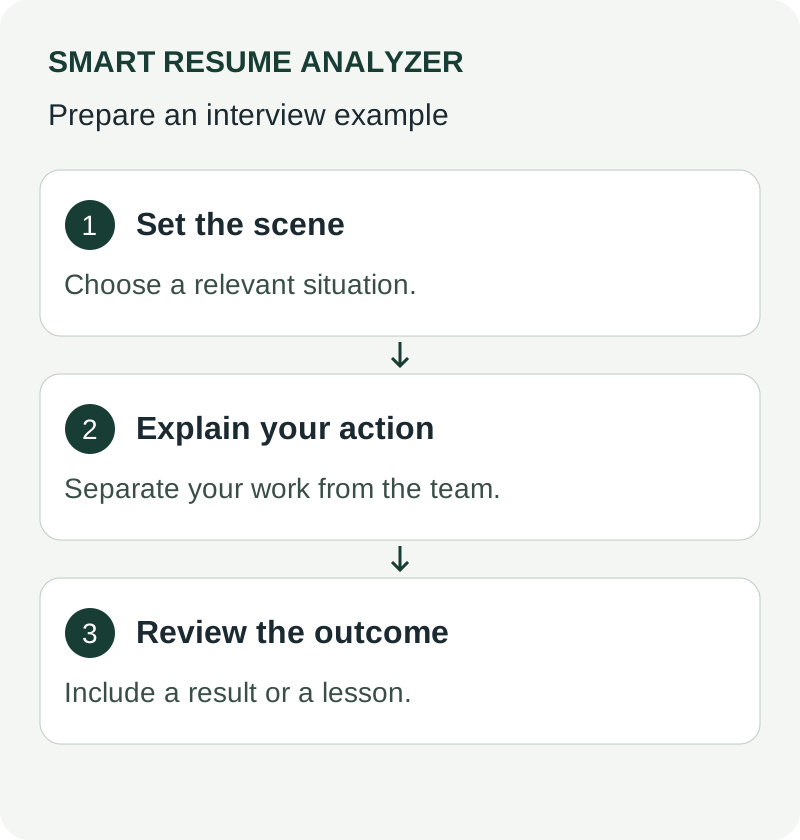
What is the STAR method?
STAR stands for Situation, Task, Action, Result. It helps you answer behavioral interview questions with a clear story.
Use STAR when the question asks about a time you handled a problem, led work, or improved a process. Start with the situation, then explain the task, the action you took, and the result. Keep the focus on your own actions. Short, direct answers work best.
Example question: Tell me about a time you missed a deadline.
Sample answer:
I was working on a resume review project with a tight turnaround. I needed to finish several files before the end of the day. I broke the work into smaller steps, prioritized the most urgent items, and updated the client early about the schedule. The project went out on time, and the client appreciated the clear communication.
What is the CAR method?
CAR stands for Context, Action, Result. It is a shorter framework than STAR.
Use CAR when you want a fast answer. It works well for simple behavioral questions or when the interviewer wants a brief response. CAR skips the separate task step and goes straight from context to action.
Example question: Tell me about a time you improved a process.
Sample answer:
At my last job, the team spent too much time rewriting the same resume feedback. I created a simple template for common edits and shared it with the group. That saved time and made the feedback more consistent.
What is the PAR method?
PAR stands for Problem, Action, Result. It is useful when the question centers on a challenge.
Use PAR when the interview question begins with a problem, conflict, or obstacle. It keeps the answer focused and easy to follow. PAR works well for situations where the problem itself matters more than the setting.
Example question: Tell me about a time you had to solve a difficult issue.
Sample answer:
The problem was that several candidates were submitting resumes that did not match the job description. I reviewed the common gaps, added clearer guidance, and helped them align keywords with the role. As a result, the resumes became stronger and easier to screen.
When should I use STAR instead of CAR or PAR?
STAR works best when the question needs a full story. It gives you the most structure.
Use STAR for questions about leadership, teamwork, conflict, success, or failure. It helps when the interviewer wants details. CAR is better for short answers. PAR works well when the problem is the main focus.
A good rule is simple: if the story needs setup, use STAR. If the answer can stay brief, use CAR. If the question starts with a challenge, try PAR.
How do I choose the best framework for each question type?
Choose the framework based on the shape of the question.
Use STAR for:
“Tell me about a time you led a project.”
“Describe a time you dealt with pressure.”
“Share an example of teamwork.”
Use CAR for:
“What is an example of improving a process?”
“Tell me about a quick win.”
“How have you handled a repeat task better?”
Use PAR for:
“Describe a difficult problem you solved.”
“Tell me about a challenge at work.”
“How did you fix a mistake?”
The best choice depends on how much detail the question needs. STAR gives depth. CAR gives speed. PAR gives focus.
What should a strong behavioral answer include?
Include only the details that support the story.
A strong answer usually has three parts:
A clear setup.
A specific action you took.
A result that shows impact.
Keep your answer relevant. Skip long background details. Interviewers want to hear how you think, act, and solve problems. A focused answer sounds more confident and easier to follow.
What are some example interview questions and answers?
Here are a few common behavioral questions with sample responses.
Tell me about a time you handled a difficult customer.
I had a customer who needed a resume report quickly before an application deadline. I listened to the issue, checked the report, and explained the next steps in plain language. The customer got the help they needed, and the issue was resolved without confusion.
Tell me about a time you made a mistake.
I once sent feedback before checking one small detail. I noticed the error right away, corrected it, and apologized clearly. I also added a final review step so I would not repeat the mistake.
Tell me about a time you worked with a tight deadline.
We had several resumes to review in a short time. I ranked the work by urgency, focused on the highest-priority items first, and kept the team updated. We finished on time and stayed organized throughout the process.
What is the main difference between STAR, CAR, and PAR?
The difference is structure, not meaning.
STAR gives the most detail.
CAR is the shortest.
PAR centers on the problem.
All three help you answer with clarity. All three also help you avoid rambling. The best framework depends on the question and how much time you have.
How can I practice these frameworks before an interview?
Practice by writing answers to common questions first.
Pick five to ten behavioral questions.
Draft one answer using STAR, CAR, or PAR.
Read the answer out loud.
Cut extra words.
Make sure the result is clear.
Use real examples from school, work, volunteering, or projects. The more specific your examples are, the stronger your answers will sound.
What if I forget the framework during the interview?
Stay calm and keep your answer simple.
If you forget the letters, just follow the pattern:
What happened?
What did you do?
What was the result?
That structure works even without the acronym. Interviewers care more about a clear answer than a perfect label. A short, honest response is better than a long, confused one.
Which framework should most job seekers learn first?
Start with STAR.
STAR teaches the full structure and works for most behavioral questions. Once that feels natural, CAR and PAR become easier to use. CAR helps when you need a shorter answer. PAR helps when the question is built around a challenge.
If you can tell one clear story in three different ways, you are ready for most interviews.
Can I use these frameworks for any interview question?
Use them for behavioral questions, not every question.
These frameworks work best for prompts that ask about past experience. They are less useful for direct technical or factual questions. If the interviewer asks about skills, tools, or background, give a direct answer instead. Save STAR, CAR, and PAR for the questions that begin with “Tell me about a time.”
Yes, this helps
Need a shorter version
Want more sample answers
Related tools
Choose behavioral questions by the job requirements
Prepare examples for disagreement, prioritization, a mistake, and learning a new task when those connect to the role. For each example, write the situation, responsibility, action, and outcome or lesson. Explain your contribution within a team result. A fictional reporting example might involve comparing definitions, finding inconsistent filters, and agreeing a shared rule with the two owners. Do not fabricate a measurable improvement. Practice follow-up questions about alternatives and what you would change. STAR organizes the answer; it does not require a fixed speaking time.
Use These Tools Next
Use a working tool to apply this guidance to your own resume or job description.
Related Resume Pages
Explore related keyword and resume guidance pages to keep improving your application materials.
Using this guidance
Use these guides to check a specific part of your application. Automated feedback is guidance, not a hiring prediction. Check suggested edits against your own experience.
Related Articles
Continue with another guide on this topic.
Interviews
Data Analyst Interview Questions & Answers
Data analyst technical interview questions and how to answer them — SQL, dashboards, statistics, and analysis scenarios with sample answers.
Interviews
DevOps Interview Questions & Answers
DevOps interview question bank with sample answers on CI/CD, cloud, containers, infrastructure as code, monitoring, and incident handling.
Interviews
QA Interview Questions & Answers
QA technical interview questions with sample answers on test cases, automation, regression testing, and defect management.