Languages on a Resume: Describe What You Can Actually Do
Describe language ability through tasks you can perform, distinguish self-assessment from certification, and avoid ambiguous proficiency bars.
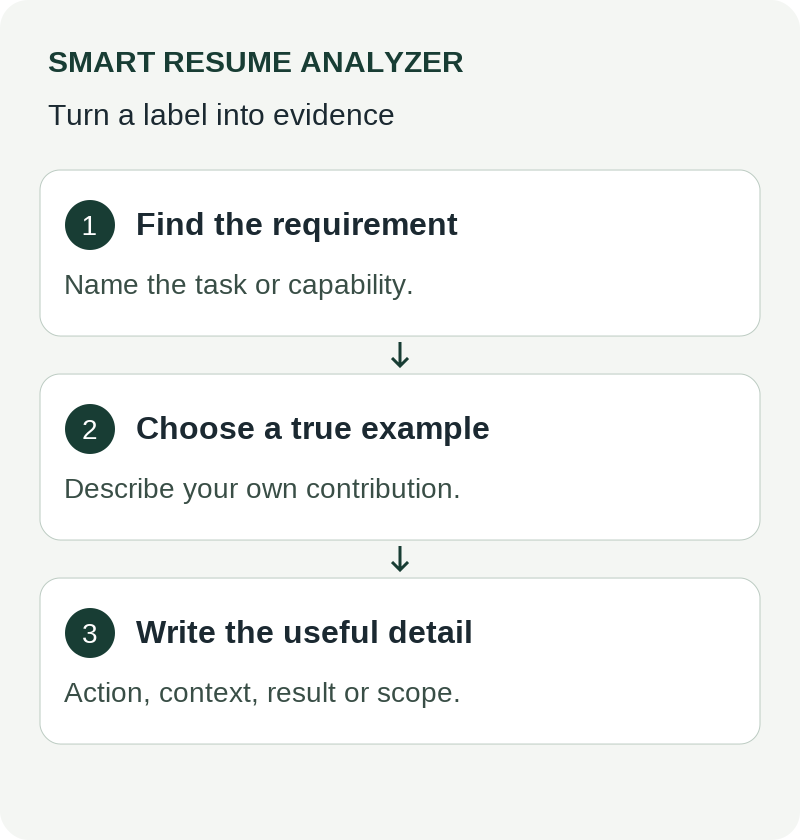
A language entry should help the reader understand what work you can perform in that language. “Fluent” without context can mean different things to different people. Describe relevant speaking, reading or writing tasks, and separate a self-assessment from a formal test result.
Start with the requirements of the role
A telephone-support job may depend on sustained conversation and understanding unfamiliar accents. A documentation role may require accurate reading and writing. A multilingual reception role may involve everyday explanations without specialist technical translation.
Read the posting for the actual task. Do not assume that conversational ability qualifies you to translate contracts, provide interpretation or produce specialist material independently.
Use descriptive entries
| Actual capability | Possible wording | Boundary to keep visible |
|---|---|---|
| Can handle everyday conversations | Spanish: conversational speaking; basic written correspondence | Not specialist translation |
| Uses the language for written support | English: customer email support and internal documentation | Describe the work you have done |
| Studying a language | French: beginner; currently studying | Do not imply independent professional use |
These are fictional wording examples, not a substitute for an assessment. Use the language names and capabilities that apply to you. You can list different strengths for speaking and writing when that helps clarify the role fit.
Keep test claims separate
If you include a test score or recognized level, copy its name, result and date accurately from your record. Do not convert your own impression into a certified level. Check the issuing organization’s current rules before claiming that a certificate remains valid for a particular application.
Without a test, you can state that the description is self-assessed. There is no need to invent a score to make the section look consistent with a template.
Avoid visual ratings that hide meaning
Three filled circles or a percentage gives no shared definition of ability. Replace the graphic with plain text that remains understandable in the exported file. If the employer asks for a particular scale, use that scale honestly in its application form.
Prepare to demonstrate the claim
Before submitting, try a realistic task: explain a customer issue, summarize a short work document or draft a routine email. This is a personal check, not a formal certification. If the task is difficult, narrow the resume wording rather than assuming you can manage it under interview pressure.
Keep unrelated language detail brief. A language section earns space through relevance and clarity, not through the number of languages listed. The best entry sets an expectation you can meet.
Sources and next step
Harvard career services: resume preparation and clear descriptions
Keep the wider skills section evidence-based using skills for a resume.
Use These Tools Next
Use a working tool to apply this guidance to your own resume or job description.
Related Resume Pages
Explore related keyword and resume guidance pages to keep improving your application materials.
Using this guidance
Use these guides to check a specific part of your application. Automated feedback is guidance, not a hiring prediction. Check suggested edits against your own experience.
Related Articles
Continue with another guide on this topic.
Tool Guides
Compare Resume Versions Before You Apply: What Actually Improved?
Comparing resume versions helps you see what actually improved, what regressed, and which draft is stronger before you apply.
Resume Writing
GitHub Profiles and Portfolio Links on Your Resume: What Recruiters Actually Check in 2026
Select relevant projects, explain your contributions, and make your GitHub or portfolio links easy to find and review.
Resume Writing
ATS Resume Keywords: What Recruiters Actually Want (Free Checklist)
Modern resumes still win on clarity, role fit, and credible proof more than on trend-driven design changes.