This One Section Can Get You Hired Faster: Your Resume Summary
Write a stronger resume summary by keeping it short, relevant, and focused on results recruiters can understand quickly.
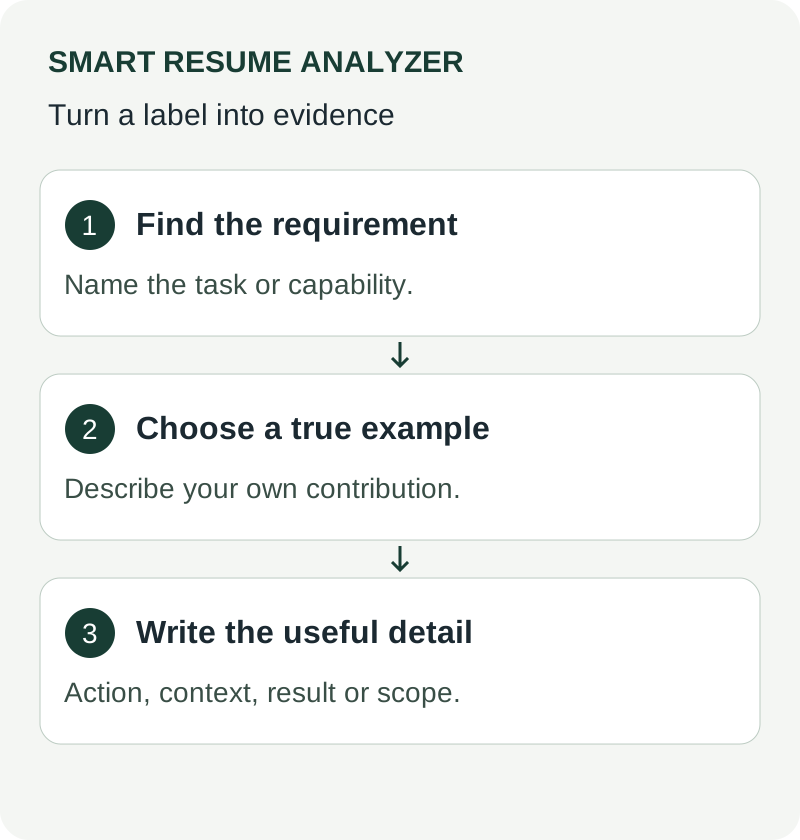
The summary section can improve a resume quickly because it frames the entire document before recruiters reach the detail lower down. This matters because an ATS resume is judged twice: first by software looking for readable structure and relevant terms, and then by a recruiter making a very fast decision about whether your job search should move forward.
How ATS Logic Shapes This Problem
A strong summary gives ATS systems extra role context through useful titles, keywords, and strengths placed near the top of the document.
What The System Usually Wants
- standard headings and readable structure
- role-specific terms that match the job description naturally
- clear experience bullets with useful evidence
- formatting that does not interfere with extraction
How Recruiter Psychology Changes The Outcome
Recruiters use the summary to orient themselves quickly. A clear summary reduces uncertainty and encourages a deeper read.
What Recruiters Notice Fast
- whether the role fit is visible near the top
- whether the bullets sound specific instead of generic
- whether the resume feels easy to scan in seconds
- whether the document creates confidence instead of friction
Weak Example
Motivated professional seeking a challenging position where I can use my skills and grow.
Stronger Example
Operations analyst with experience improving workflow reporting, reducing manual tracking, and supporting faster cross-team decision-making.
Common Mistakes That Make This Worse
- writing a vague objective instead of a focused summary
- making the section too long and generic
- using adjectives without proof
- failing to align the summary with the target role
What To Do Instead
- keep the summary short and role-specific
- include relevant strengths and useful keywords
- connect the top section to the evidence in your bullets
- remove broad claims that do not help fit
Final Resume Tips For A Stronger Job Search
A stronger summary improves the first impression and helps the rest of the resume make sense faster. When that message is clear, both ATS systems and recruiters have a much easier time moving your application forward.
## Replace a generic summary with a focused one An illustrative support summary could read: “Support operations professional with experience coordinating shift handovers, maintaining escalation records, and documenting recurring account issues.” The statement names a professional focus and evidence without claiming unverified results. A graduate can name their qualification and project work, clearly distinguishing it from employment. Use a summary only when it adds useful context rather than repeating the skills section. The wording cannot promise faster hiring; relevance and accurate supporting evidence are the purpose. [Further guidance: CareerOneStop resume guide](https://cloudfront.careeronestop.org/JobSearch/Resumes/ResumeGuide/introduction.aspx?frd=true)Use These Tools Next
Use a working tool to apply this guidance to your own resume or job description.
Related Resume Pages
Explore related keyword and resume guidance pages to keep improving your application materials.
Using this guidance
Use these guides to check a specific part of your application. Automated feedback is guidance, not a hiring prediction. Check suggested edits against your own experience.
Related Articles
Continue with another guide on this topic.
Job Search Strategy
Using AI to Edit Your Resume Without Misrepresenting Your Work
Review AI-assisted resume writing for factual accuracy, specific evidence, and a voice you can support in an interview.
Resume Formatting
Your Resume Has This Hidden Mistake: Paragraphs Instead of Bullet Points
Long paragraphs hide strong experience. Short, clear bullet points make your resume easier for recruiters to scan and understand.
Resume Editing
Don’t Add This In Your Resume: Irrelevant Experience
Irrelevant experience can weaken your resume by distracting from the role you want and hiding the evidence that matters most.