What’s the Best Resume Length? Most People Write Too Much or Too Little
Find the best resume length, avoid writing too much or too little, and see when a one-page resume works best under 5 years of experience.
Resume length is really a relevance problem. Too much detail hides value, and too little detail fails to prove value. This matters because an ATS resume is judged twice: first by software looking for readable structure and relevant terms, and then by a recruiter making a very fast decision about whether your job search should move forward.
How ATS Logic Shapes This Problem
ATS systems can read multi-page documents, but longer resumes often contain extra material that weakens relevance and keyword focus.
What The System Usually Wants
- standard headings and readable structure
- role-specific terms that match the job description naturally
- clear experience bullets with useful evidence
- formatting that does not interfere with extraction
How Recruiter Psychology Changes The Outcome
Recruiters prefer the shortest resume that still proves fit. A well-edited page feels more confident than a bloated document full of low-value detail.
What Recruiters Notice Fast
- whether the role fit is visible near the top
- whether the bullets sound specific instead of generic
- whether the resume feels easy to scan in seconds
- whether the document creates confidence instead of friction
Weak Example
Two full pages of early-career work with repetitive bullets and every class project included equally.
Stronger Example
One focused page with the most relevant projects, core skills, and measurable outcomes aligned to the target role.
Common Mistakes That Make This Worse
- keeping every detail from every role
- using space on low-impact tasks
- cutting too much and losing proof entirely
- forgetting that experience level should shape length
What To Do Instead
- aim for one page under five years of experience when possible
- remove repetition and low-value bullets
- keep enough proof to show scope and outcome
- review each line by asking whether it helps this specific job search
Final Resume Tips For A Stronger Job Search
Length matters only because it affects focus, readability, and the speed of review. When that message is clear, both ATS systems and recruiters have a much easier time moving your application forward.
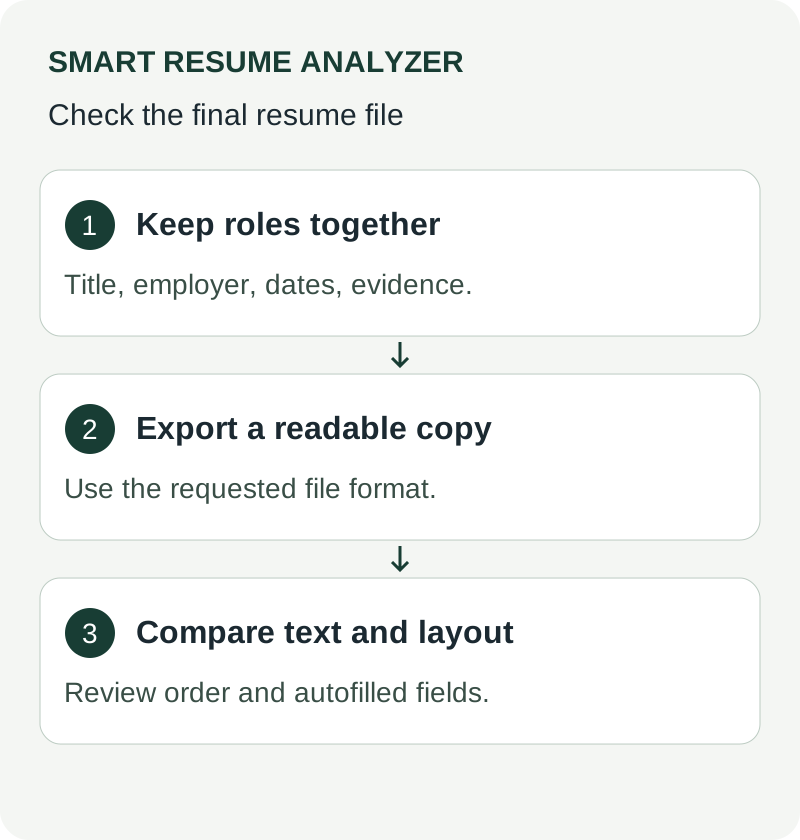
## A manual resume length check Count pages in the final exported file, not just the editor. Mark each bullet as directly relevant, supporting context, or unrelated to the target role. Shorten unrelated material before reducing readable type. A one-page draft can be useful for limited experience; two pages can be justified when relevant evidence needs the space. These are editing choices, not an ATS page-count threshold. Copy a role block into plain text and confirm its dates stay attached. If a portal states a limit, follow it. This is a manual length check using your existing editor, not a dedicated length-scoring tool. [Further guidance: CareerOneStop resume guide](https://cloudfront.careeronestop.org/JobSearch/Resumes/ResumeGuide/introduction.aspx?frd=true)Use These Tools Next
Use a working tool to apply this guidance to your own resume or job description.
Related Resume Pages
Explore related keyword and resume guidance pages to keep improving your application materials.
Using this guidance
Use these guides to check a specific part of your application. Automated feedback is guidance, not a hiring prediction. Check suggested edits against your own experience.
Related Articles
Continue with another guide on this topic.
Resume Tools
AI Resume Analyzer vs Resume Checker vs Resume Scanner: What Job Seekers Are Really Looking For
Searches for AI resume analyzer, checker, scanner, screener, resume analyser, cv analyzer, and AI resume screening free usually reflect one goal: better ATS readability and clearer edits.
Resume Tools
AI Resume Analyzer vs Resume Builder: What Job Seekers Actually Need
Resume builders help you create a draft. Resume analyzers help you improve one. Job seekers usually need both at different moments.
AI & Technology
AI Resume Analyzer 2025: Understanding ATS Systems and Resume Optimization
AI resume analysis is most valuable when it speeds up revision loops and points to better edits, not just better scores.