Job Interview Mistakes: A Practical Preparation Checklist
Avoid common interview mistakes in preparation, examples, questions, and follow-up. Use a rehearsal checklist and distinguish mistakes from weaknesses.
Interview mistakes are usually actions you can change: vague examples, inaccurate claims, poor preparation, or an unclear understanding of the job. They differ from the personal development areas discussed in a “What is your weakness?” question.
Before the interview
Confirm the time zone, format, contact, and any requested preparation. Read the role and save a copy so you can refer to its requirements even if the listing changes. Prepare examples connected to the work rather than guessing which fashionable questions the employer will ask.
For a remote interview, test audio, camera, connection, and the meeting link. Have a practical fallback contact method from the invitation. For an in-person interview, check the location and arrival instructions. Preparation reduces avoidable friction but cannot remove every technical or travel problem.
During an answer
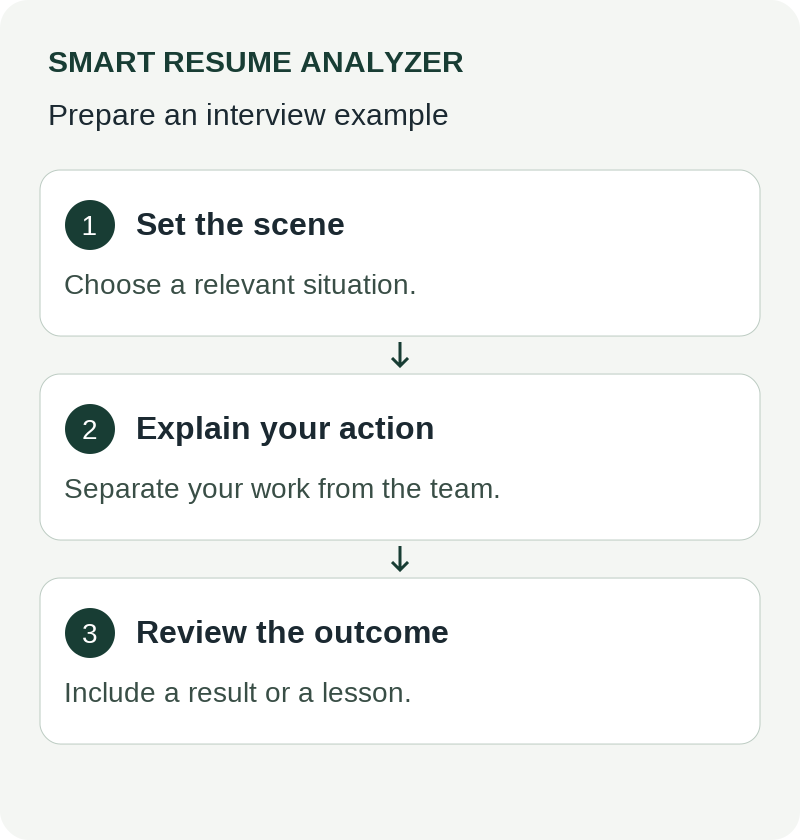
A common mistake is describing what “we” did without explaining your contribution. Another is making the story longer while leaving the result unclear. Use a specific setting, your action, and the outcome or lesson you can support.
Illustrative improvement: “We fixed a reporting problem” becomes “I compared the two report definitions, found that one included cancelled orders, and documented a shared filter for the next reporting cycle.” The second answer identifies work that can be discussed. It does not require an invented percentage.
If you do not understand a question, ask for clarification. If you lack direct experience, explain the related experience you have and distinguish it from a hypothetical approach.
Questions and professional judgment
Do not ask only questions already answered in the invitation. Prepare questions about priorities, collaboration, and how the role is evaluated. Avoid criticizing former colleagues or disclosing confidential customer information to make an example sound impressive.
If you notice an error in your answer, correct it plainly. A calm factual correction is more useful than trying to defend an inaccurate number. Take notes only in a way that does not interrupt the conversation, and ask permission before recording anything.
Afterward
Write down what you learned and where your examples were unclear. Send a concise thank-you email where appropriate, and follow the stated decision timeline. A delayed reply does not prove you made a mistake.
For the separate development-area question, use the interview weaknesses guide. It explains how to discuss a real limitation and an improvement process without disguising a strength as a weakness.
Mistakes that are easy to fix
Most interview mistakes come from lack of preparation rather than lack of ability. Common ones include knowing little about the employer, giving long unfocused answers, speaking negatively about a past employer, not having questions to ask, and not rehearsing the technology for a remote interview.
How to prepare in a short time
- Read the posting and note the three responsibilities that matter most.
- Prepare one real example for each, with the situation, your action and the result.
- Learn what the company does and one recent thing about it.
- Write two questions about the role and the team.
- Test your camera, microphone and connection if the interview is remote.
During the conversation
Listen to the full question before answering, keep answers to a minute or two, and ask for clarification if needed. Be honest about what you do not know and explain how you would find out.
After
Send a brief thank-you message, and note what you would improve. The interview prep tool can help you practise with questions based on your own resume.
Questions people ask
What if I make a mistake during an answer? Pause, correct it briefly and move on. Interviewers notice how you recover more than the slip itself.
Is it acceptable to ask for a moment to think? Yes. A short pause before a considered answer reads better than a rushed one.
Sources and further reading
These pages are independent references for the advice in "Job Interview Mistakes: A Practical Preparation Checklist". Read them alongside this guide and follow your target employer's own instructions where they differ.
Use These Tools Next
Use a working tool to apply this guidance to your own resume or job description.
Related Resume Pages
Explore related keyword and resume guidance pages to keep improving your application materials.
Using this guidance
Use these guides to check a specific part of your application. Automated feedback is guidance, not a hiring prediction. Check suggested edits against your own experience.
Related Articles
Continue with another guide on this topic.
Tool Guides
Outcome Analytics For Your Job Search: Track What Actually Gets Interviews
Outcome analytics helps job seekers track which resume versions, roles, and application patterns actually lead to interviews.
Career Advice
How to Check Resume Claims Before You Apply
Audit your resume metrics, ownership claims, skills, and dates with a claim ledger that helps you explain each statement accurately in an interview.
Resume Writing
5 Common Mistakes To Avoid When Hiring A Resume Writer
Hiring the wrong resume writer can leave you with a generic, ATS-weak document that sounds better but still does not perform.