Cover Letter vs Resume: Different Jobs, Shared Evidence
Compare a cover letter and resume by purpose, structure, and examples. Learn which details to repeat, what to explain, and when instructions differ.
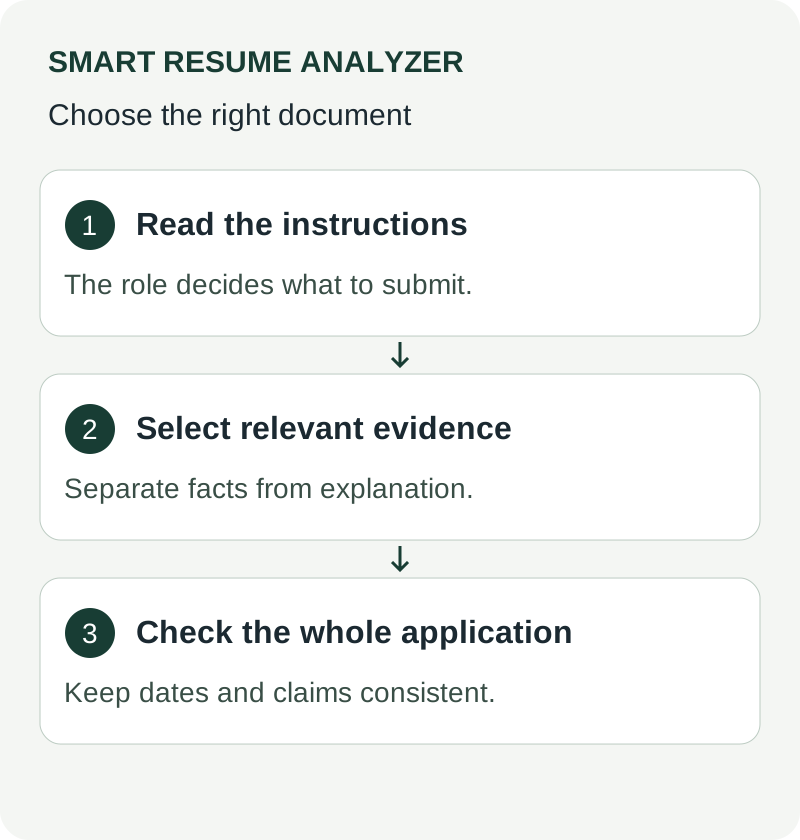
A resume organizes your qualifications so a reader can locate them. A cover letter explains why selected qualifications matter for one opportunity. They can use the same evidence without becoming copies of one another.
Compare the documents
| Question | Resume | Cover letter |
|---|---|---|
| What does it organize? | Roles, education, skills, projects | A short argument about the role |
| How is it read? | Sections and bullets | Connected paragraphs |
| What should change by application? | Relevant emphasis and evidence | Employer context and selected examples |
| What must agree? | Dates, titles, tools, results | The same underlying facts |
The employer's instructions decide whether a letter is required. A field labelled optional does not establish that every employer ignores letters, and a missing field does not justify attaching extra material in an unrelated upload slot.
One achievement, two treatments
Illustrative resume bullet: “Built a weekly reconciliation report for support and finance using SQL, replacing two manually maintained lists.”
Illustrative letter passage: “Your posting emphasizes consistent reporting across teams. I worked with support and finance to reconcile their separate lists and built the weekly SQL report they used to review discrepancies.”
The letter explains the connection to the posting. It does not need to restate the full tool list, dates, and every bullet from the role. If the claim is important enough to appear in the letter, confirm the resume provides the necessary context or add a truthful supporting detail there.
Decide what to put where
Put a certification name and its current status in an appropriate resume section. Explain its relevance briefly in the letter if the role asks for it. Put work dates in the resume; explain a career transition in the letter only when it helps the reader understand your fit. Do not disclose sensitive personal information simply to fill space.
For a graduate, coursework and project evidence can support both documents. For a career changer, transferable skills should be demonstrated through tasks rather than relabelled as experience in a job you have never held.
Review the pair together
Read the documents side by side. Check company names in the letter, job titles in both, and any measurements you reused. Remove contradictory claims and unsupported adjectives. Save each in the requested file format and inspect the exported files. See where resume and cover-letter keywords belong for a narrower guide to matching terminology without repetition.
Sources and further reading
Use These Tools Next
Use a working tool to apply this guidance to your own resume or job description.
Related Resume Pages
Explore related keyword and resume guidance pages to keep improving your application materials.
Using this guidance
Use these guides to check a specific part of your application. Automated feedback is guidance, not a hiring prediction. Check suggested edits against your own experience.
Related Articles
Continue with another guide on this topic.
Job Search Strategy
How to Write a Cover Letter That Doesn't Sound AI-Generated in 2026
Replace generic wording with specific motivation and evidence from your work. Review AI-assisted drafts for accuracy and your own voice.
Cover Letters
AI Cover Letter Optimization for IT Applications
Learn how AI cover letter optimization helps IT candidates tailor applications faster with a better **cover letter builder** and resume alignment.
Job Search Strategy
Preparing a Cover Letter for an Online Application
Make a cover letter readable, relevant, and consistent with your resume without assuming that every portal scores it.