Letter of Introduction: Templates for Making a Connection
Write a letter of introduction for yourself or another person. Includes permission checks, adaptable examples, and the difference from a job application.
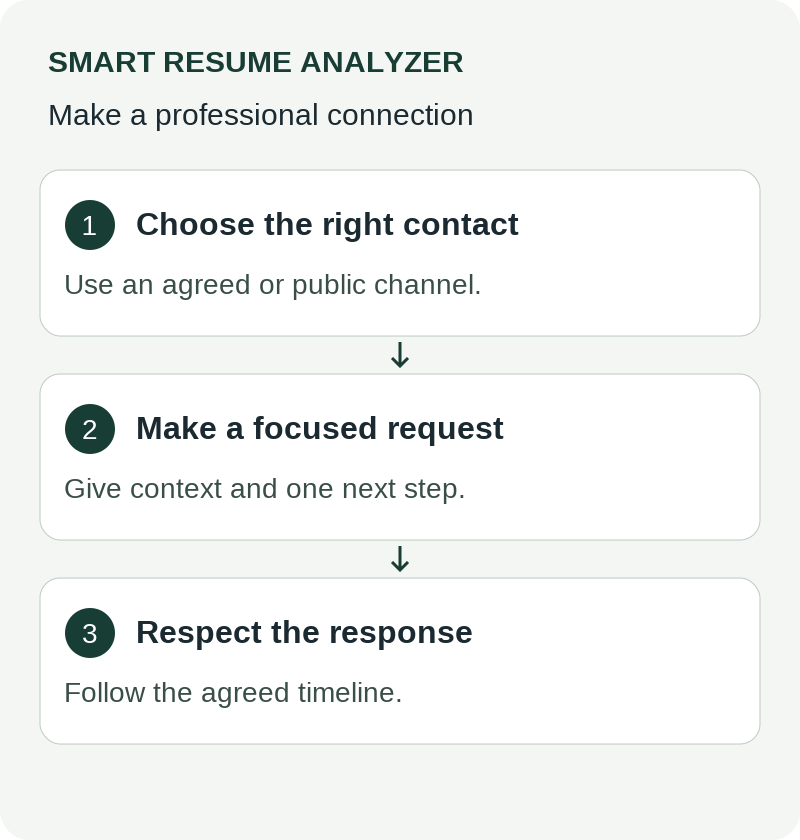
A letter of introduction opens a connection between people who may not know one another. It can introduce you to a professional contact or introduce two people to each other. It differs from a cover letter, which normally responds to a specific hiring opportunity.
Decide who is being introduced
When introducing yourself, explain who you are, why this person is relevant to your request, and what small next step you hope for. When connecting two other people, get permission before sharing contact details or attaching private material. Do not assume a colleague wants to make a referral, mentor someone, or review a resume.
Keep the request narrow enough to answer. “Can you help me find a job?” asks the reader to design the task. “Would you be open to a brief conversation about moving from support into customer success?” gives them a concrete decision.
Self-introduction template
Subject: Introduction — support operations to customer success
Hello [Name],
I am [Your name], a [current role or accurate background]. I found your [public talk or relevant professional work] while researching [specific topic].
I am exploring [clear goal]. In my current work, I [one relevant example]. Would you be open to [small request] at a time that suits you?
Thank you for considering it, [Name]
Replace every bracket. Do not invent familiarity with someone's work: reference only something you have actually read or attended.
Introducing two contacts
After both agree, write a short shared message: “Maya, meet Sam, who is exploring support operations roles. Sam, Maya has experience building service teams. You both said you would be happy to connect about that area. I will leave you to arrange a suitable time.” This fictional example explains the connection without promising an interview or endorsement.
Avoid turning an introduction into an application
Do not attach a large portfolio, ask multiple favors, or copy additional contacts without a reason. If a contact asks for your resume, send the relevant version and clarify the role you are considering. If you are approaching an employer about future openings, use a letter of interest instead.
A polite introduction may receive no reply. That is not evidence of a hiring decision. Respect the contact's boundaries and any stated preference about follow-up.
When to send one
A letter of introduction works when a reason to connect exists and the reader would plausibly want to hear from you. Examples include an event you both attended, a shared contact, a published piece of their work, or a role you plan to apply for. Without a reason, it reads as a cold pitch.
What to put in the first lines
Say who you are in a sentence, why you are writing, and what connects you to the reader. If a mutual contact suggested the message, name them only with their permission. The reader should understand why you wrote to them before the end of the first paragraph.
Keep the request small
Ask for something easy to give, such as a short conversation, advice on a specific question or a pointer to the right person. A large request, such as a job, makes it harder to say yes. Offer something in return where you can, even if it is just a clear thank-you and a note about how you will use the advice.
Follow-up
If you do not hear back, follow up once after a week or two, then leave it. Keep a short note of who you wrote to, when and why, so the next message builds on the last. When the conversation leads to an application, have a readable resume ready and check it with the ATS parser. For applications themselves, the cover letter generator can help you draft a letter you then make your own.
Sources and further reading
These pages are independent references for the advice in "Letter of Introduction: Templates for Making a Connection". Read them alongside this guide and follow your target employer's own instructions where they differ.
Use These Tools Next
Use a working tool to apply this guidance to your own resume or job description.
Related Resume Pages
Explore related keyword and resume guidance pages to keep improving your application materials.
Using this guidance
Use these guides to check a specific part of your application. Automated feedback is guidance, not a hiring prediction. Check suggested edits against your own experience.
Related Articles
Continue with another guide on this topic.
Resume Tools
AI Resume Analyzer vs Resume Builder: What Job Seekers Actually Need
Resume builders help you create a draft. Resume analyzers help you improve one. Job seekers usually need both at different moments.
Resume Guides
Career Change Resume Examples & Strategies
Career change resume examples and strategies to reframe transferable skills and target a new role with ATS-friendly language.
Resume Examples
Career-Change Tech Resume Example: Reframe Experience
Work through a technical resume example for an operations career changer, with honest titles, transferable evidence, and clearly labelled projects.