How to Write a Cover Letter: From Job Requirements to a Draft
Write a cover letter from a job posting and your own evidence. Includes a planning worksheet, a fictional example, and a final application checklist.
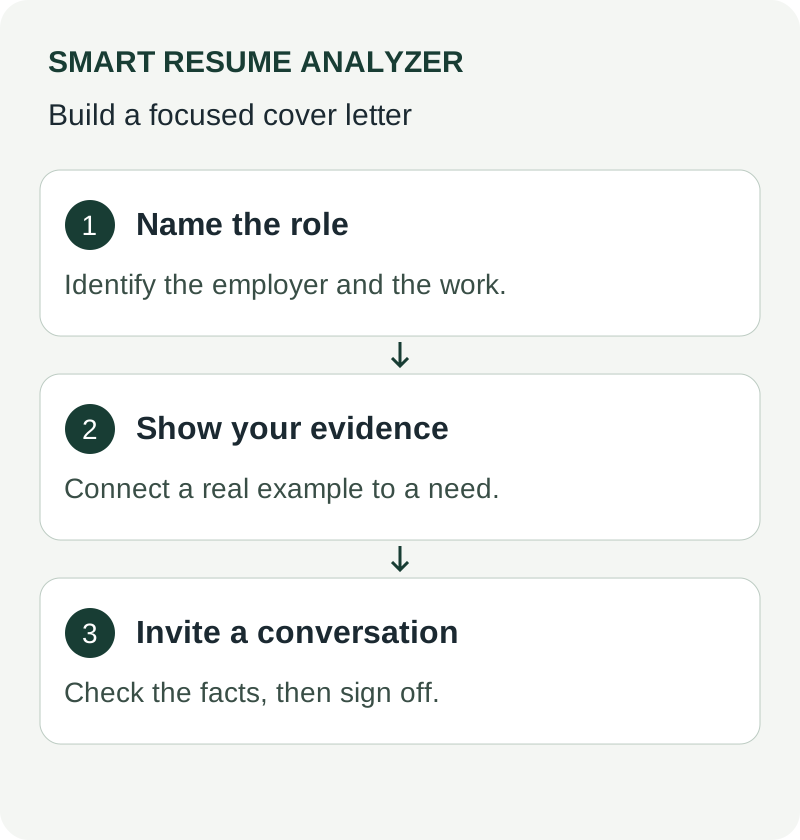
Write a cover letter by selecting the employer's main needs, matching them to truthful examples, and explaining the connection in a short letter. This guide provides a complete drafting workflow; the separate opening, closing, and length guides handle those decisions in more detail.
Build a small evidence worksheet
Read the posting before opening a template. Write down the exact role, organization, and two responsibilities you can support. Add one experience beside each. Mark any requirement you cannot demonstrate instead of allowing a generator to fill the gap with an invented qualification.
| Employer need | Your verified evidence | Detail to include |
|---|---|---|
| Coordinate handovers | Maintained a shared shift log | What the log recorded and who used it |
| Explain service issues | Wrote a troubleshooting guide | Who could follow the guide and why it mattered |
This fictional worksheet is a planning example, not a claim about a real applicant. Your evidence can come from employment, volunteering, coursework, or a project. Describe the setting accurately.
Draft a short letter
Dear Hiring Team,
I am applying for the Support Coordinator position at Cedar Systems. Your emphasis on reliable handovers connects to my experience maintaining a shared incident log for rotating support shifts.
I organized the log around the affected service, action taken, and next owner. I also wrote a troubleshooting guide for recurring account issues and reviewed it with new colleagues during onboarding. Those projects required explaining technical details in language the next person could act on.
I would welcome a conversation about your team's handover process and the coordination work this role supports. Thank you for considering my application.
Best regards, Alex Rivera
This is an illustrative compact draft. It omits contact details and date so you can see the argument clearly. Add them where the submission format calls for them, and replace every fictional detail.
Make the draft specific without padding
Explain one genuine reason the advertised work interests you. Do not invent an employer's strategy, praise a product you have not used, or quote confidential results from a previous job. If a useful number cannot be verified, name the deliverable or scope instead.
A cover-letter generator can help draft from supplied context, but check each resulting claim. Read the final letter beside your resume, remove contradictions, and follow the employer's length and file instructions. Use the review checklist before submitting.
Sources and further reading
Use These Tools Next
Use a working tool to apply this guidance to your own resume or job description.
Related Resume Pages
Explore related keyword and resume guidance pages to keep improving your application materials.
Using this guidance
Use these guides to check a specific part of your application. Automated feedback is guidance, not a hiring prediction. Check suggested edits against your own experience.
Related Articles
Continue with another guide on this topic.
Job Search Strategy
How to Write a Cover Letter That Doesn't Sound AI-Generated in 2026
Replace generic wording with specific motivation and evidence from your work. Review AI-assisted drafts for accuracy and your own voice.
Job Applications
Cover Letter Mastery 2025: Write Compelling Letters That Get Interviews
A good cover letter in 2025 is short, specific, and built around the exact role instead of repeating the resume.
Cover Letters
AI Cover Letter Optimization for IT Applications
Learn how AI cover letter optimization helps IT candidates tailor applications faster with a better **cover letter builder** and resume alignment.