How to Start an Application Letter: Openings With Evidence
Start an application letter with the role, employer, and a relevant example. Compare openings for graduates, referrals, and career changes.
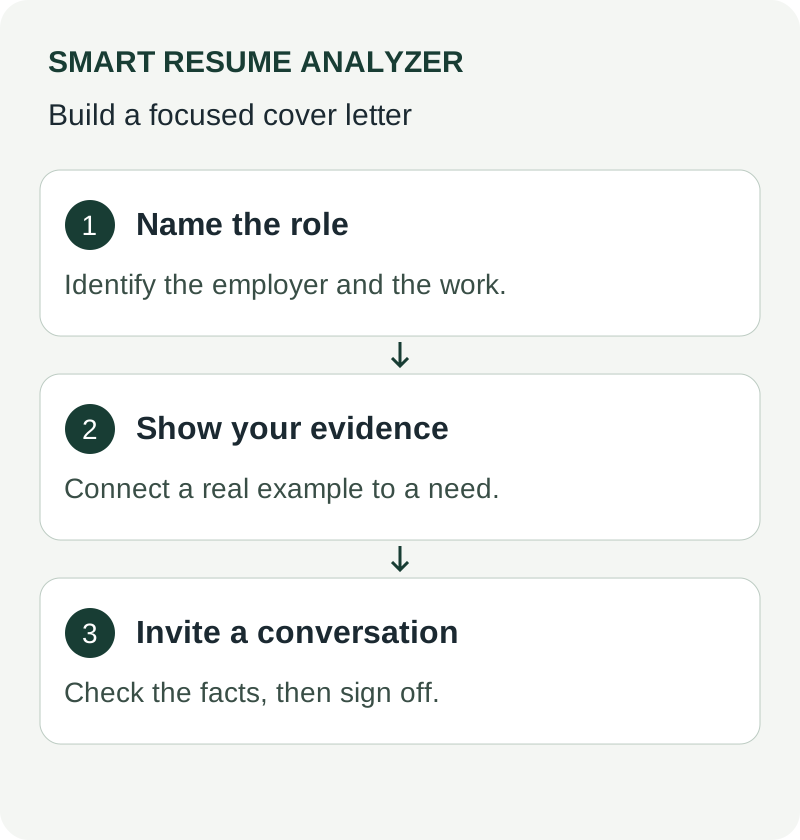
An application letter should make it easy to identify the vacancy and the reason you fit it. Start with the exact role and employer, then connect one requirement to work you have actually done. You do not need a dramatic personal story to earn the second paragraph.
Choose the opening for your situation
For a published vacancy, name the position and use its reference number if the employer asks for it. For an unsolicited approach, explain which team you hope to support; that is closer to a letter of interest. A referral is useful context only when the person has agreed to be named. Do not imply they endorsed your application when they merely shared the advert.
An opening can usually do its job in two sentences. That is an editing suggestion, not an application-system rule. A portal with a specific prompt takes priority over this structure.
Three illustrative openings
Graduate: “I am applying for the Junior QA Analyst position at Cedar Systems. My final-year project included regression tests for a booking API, which connects to your requirement for testing service integrations.”
Experienced applicant: “Please consider my application for the Operations Coordinator role at Cedar Systems. In my current position, I maintain the handover log used by three support shifts.”
Career change: “I am applying for the Customer Success Associate role at Cedar Systems. My teaching work includes onboarding new staff and explaining unfamiliar processes, experience I would bring to your customer training program.”
These are fictional examples. Replace the project, organization, and experience with facts you can defend. The career-change opening acknowledges the connection without pretending the applicant has held the target job before.
Move from the opening to proof
Underline the requirement your opening answers. In the next paragraph, describe the action you took, the people or system involved, and the result you can verify. If you cannot document a number, use scope: a weekly process, a named deliverable, or a specific group served.
Cut statements such as “I am the perfect candidate.” They consume space without helping the employer assess you. Check the company spelling and job title after each reuse; those details are easy to overlook in a saved draft. Continue with the complete cover-letter workflow, then review the final export before uploading it.
Sources and further reading
Use These Tools Next
Use a working tool to apply this guidance to your own resume or job description.
Related Resume Pages
Explore related keyword and resume guidance pages to keep improving your application materials.
Using this guidance
Use these guides to check a specific part of your application. Automated feedback is guidance, not a hiring prediction. Check suggested edits against your own experience.
Related Articles
Continue with another guide on this topic.
Job Search Strategy
Preparing a Cover Letter for an Online Application
Make a cover letter readable, relevant, and consistent with your resume without assuming that every portal scores it.
Job Search Strategy
How to Write a Cover Letter That Doesn't Sound AI-Generated in 2026
Replace generic wording with specific motivation and evidence from your work. Review AI-assisted drafts for accuracy and your own voice.
Cover Letters
AI Cover Letter Optimization for IT Applications
Learn how AI cover letter optimization helps IT candidates tailor applications faster with a better **cover letter builder** and resume alignment.