To Whom It May Concern: When to Use It and Alternatives
Choose a cover-letter greeting when no contact name is listed. Compare “To Whom It May Concern” with specific team greetings and practical examples.
“To Whom It May Concern” is a formal greeting for a document whose reader is unknown. It can suit a general reference letter, but a job application usually benefits from a greeting tied to the hiring team or department.
Search for a reliable name first
Check the vacancy, the employer's careers page, and the recruiter's message. Use a named contact when the employer identifies that person as the recipient. A public executive profile does not mean the executive reviews applications. Do not guess a manager's name from an unrelated social account or infer gender from a name.
If a listing gives only a role and company, “Dear Hiring Team,” is a reasonable option. “Dear Customer Support Hiring Team,” adds context when that team is actually named in the advert. Specificity is useful only when it is accurate.
Examples for different situations
| Situation | Possible greeting | Check first |
|---|---|---|
| Named recipient | Dear Alex Rivera, | Spelling and intended recipient |
| Team identified | Dear Engineering Hiring Team, | Whether that is the advertised team |
| No reliable name | Dear Hiring Manager, | No employer-specific instruction |
| General reference | To Whom It May Concern: | Whether a recipient can be named |
These are style options, not rules that determine an ATS score. There is no universal rejection threshold attached to a salutation. Employer instructions and local business conventions can differ.
Capitalization and punctuation
If you use the phrase as a greeting, “To Whom It May Concern:” is a conventional formal presentation. A comma is also encountered in correspondence; consistency with the rest of the letter matters more than debating punctuation. Keep the greeting on its own line and begin the message in a separate paragraph.
Avoid “Dear Sir/Madam” when a neutral team greeting communicates the same thing. Avoid opening directly with an unsupported claim about how impressed the employer will be.
Move attention to your evidence
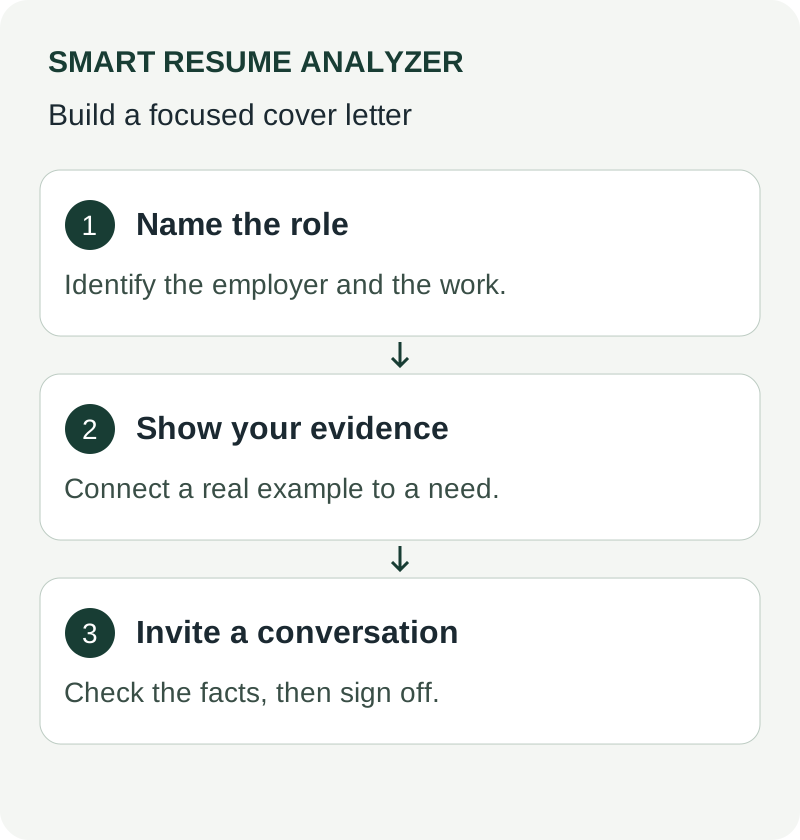
Once you have a suitable greeting, spend your time on the first paragraph and the relevant example. A personalized greeting cannot rescue an inaccurate application. Verify the role, organization, and claims before sending. The application-letter opening guide shows how to make those next sentences concrete without guessing who will read them.
Sources and further reading
Use These Tools Next
Use a working tool to apply this guidance to your own resume or job description.
Related Resume Pages
Explore related keyword and resume guidance pages to keep improving your application materials.
Using this guidance
Use these guides to check a specific part of your application. Automated feedback is guidance, not a hiring prediction. Check suggested edits against your own experience.
Related Articles
Continue with another guide on this topic.
Job Search Strategy
How to Write a Cover Letter That Doesn't Sound AI-Generated in 2026
Replace generic wording with specific motivation and evidence from your work. Review AI-assisted drafts for accuracy and your own voice.
Cover Letters
AI Cover Letter Optimization for IT Applications
Learn how AI cover letter optimization helps IT candidates tailor applications faster with a better **cover letter builder** and resume alignment.
Tool Guides
How To Use An Apply Kit For Faster Cover Letters And Interview Prep
An apply kit connects resume analysis, cover letter drafting, and interview prep so your application workflow stays faster and more consistent.